Natural Crystal Forms
What Do We Really Mean by “Natural Forms”?
Have you ever held a crystal and wondered why its surface looks so wild, intricate, or strangely perfect – yet clearly untouched? Many people ask this when stress pushes them toward grounding tools, and they suddenly notice how calming a raw stone feels in the hand. The answer often leads them into the world of Natural Forms, a category that celebrates crystals and gemstones exactly as the Earth made them.
At its core, Natural Forms refers to crystal shapes that arise through geological processes alone – no polishing wheels, no carving tools, no human tinkering. These formations grow in darkness, pressure, silence, and vast stretches of time. They emerge from mineral-rich fluids, volcanic heat, tectonic shifts, and the gentle patience of slow cooling. Every ridge, cavity, nodule, phantom layer, and free-grown point is crafted by nature’s invisible choreography.
Why does this matter? Because these raw formations carry something that polished stones can’t always offer: the story of their creation preserved in shape and texture. Collectors love them for their authenticity, while metaphysical practitioners value the unaltered energy flow. And for anyone seeking a quiet moment or a sense of reconnection, natural textures have a way of grounding the mind almost instantly.
This category is wonderfully diverse. It includes everything from clusters and floaters to geodes, stalactitic formations, phantoms, scepters, twins, and skeletal structures – each shaped by a specific set of geological conditions. Understanding these conditions not only helps you identify what you’re holding but also deepens your appreciation for its natural architecture.
How Natural Crystal Forms Develop
Nature’s Quiet Construction Site
Stress makes us ask questions like, “Where do these beautiful structures even come from, and why do some look chaotic while others appear impossibly geometric?” The answers begin deep underground. Crystals grow when minerals dissolved in hot fluids begin to cool, settle, and arrange themselves into repeating atomic patterns. But this process is far from simple.
Temperature swings can cause sudden shifts in growth speed. Mineral saturation can spike or drop, altering the shape of growing faces. Fluids may surge through fractures, bringing in new elements or sweeping others away. Volcanic activity creates pockets of space; tectonic forces squeeze minerals into tight channels. Over thousands – or millions – of years, these changing conditions sculpt forms that seem almost deliberate.
Some crystals grow steadily in calm environments. Others struggle through chaotic cycles of heat, pressure, and mineral changes. These environmental fluctuations leave clues: etchings, layering, color zoning, phantom lines, skeletal structures, or interrupted faces that later reheal. Each clue is a geological breadcrumb, tracing the mineral’s journey from chaos to completion.
The Space to Grow (or the Lack of It)
Another common question: “Why do some crystals form perfect points while others look compressed or fused together?” Space is the answer – specifically, how much of it is available.
In wide-open cavities, crystals can grow freely. This is where you’ll find geodes, floaters, and beautifully defined points. Every face has room to expand. Growth is symmetrical, spacious, calm.
But when the environment tightens – say, in veins, layers, or fractures – the story changes. Crystals can be elongated, sheet-like, or stacked. They may fuse into clusters, twin repeatedly, or flatten into blades and tabs. Limited or directional space shapes their architecture like a mold they never chose but had to obey.
Some formations, like nodules or concretions, begin without a cavity at all. They grow outward in every direction from a central seed, filling the available space until they become round, layered, or completely enclosed.
The Influence of the Host Rock and Companions
If you’ve ever wondered why some stones display tiny sparkles on their surface, unusual coatings, or ghostlike shapes inside, look to the mineral neighbors. The host rock plays a major role in shaping the final form.
Different rocks contribute different chemical ingredients. Some encourage smooth growth; others promote fibrous or botryoidal textures. And when secondary minerals join the process – whether early or late – they add even more personality. A thin layer might crystallize over the primary mineral, forming druzy. A shift in chemistry may trap an earlier growth layer inside a later one, creating phantoms. Water flow can dissolve and regrow crystal surfaces, leaving etch marks or forming skeletal patterns.
Visual Characteristics of Natural Crystal Forms
When life feels chaotic, many people reach for something visually soothing – something that instantly slows the mind. Natural crystal forms often do exactly that, not because they’re perfect, but because their surfaces, layers, and shapes tell a story that feels grounding. Yet what gives these raw formations their fascinating look? Let’s break down the visual signatures that make natural crystals so recognizable and captivating.
Textures: The First Thing You Notice
Ever run your fingers across a crystal and feel an unexpected ridge, a silky groove, or a field of tiny bubbles? Texture is the first sensory clue that you’re holding a natural form.
Some crystals grow with raw, jagged surfaces, shaped by quick mineral shifts or abrupt breakages that later stabilize. Others feel smooth and almost soft, the result of slow, steady growth in calm cavities. You might see botryoidal bubbles, rounded like clusters of tiny grapes; fibrous textures that look like packed strands of silk; or layered surfaces where mineral bands stack like pages in a geological book.
And then there are the etched crystals – surfaces carved by dissolving fluids that leave cryptic patterns, almost like ancient runes. Each texture is a geological memory etched into the stone.
Structure: The Architecture of Raw Growth
If texture is the first impression, structure is the full architecture. Stress often makes people crave order, but nature creates its own kind of order – one that’s geometric, organic, and beautifully unpredictable.
Natural forms can display:
- Points that rise like tiny towers
- Clusters where dozens of points grow together like a mineral cityscape
- Nodules and concretions, round and self-contained
- Cavities lined with sparkles that draw the eye inward
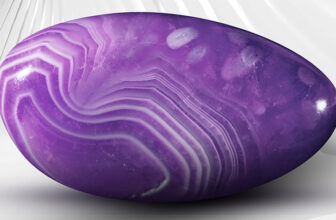
- Layered or banded forms showing the mineral’s shifting environment
- Tubes and curved forms shaped by flowing fluids or biological templates
- Sheet-like crystals, thin and elegant, formed in tight spaces
These structures aren’t designed; they’re discovered. And each one reveals something about the space, pressure, and chemistry of its birthplace.
Color & Transparency: Nature’s Subtle Storytelling
People often ask, “Why does this crystal have stripes?” or “Why is only half of it clear?” Color and transparency are nature’s way of narrating the mineral’s emotional timeline.
As a crystal grows, the elements in its environment can fluctuate. These changes create:
- Color zoning, where hues shift between layers
- Inclusions, tiny minerals or bubbles trapped inside like time capsules
- Variations in clarity, from glassy transparency to cloudy, milky pockets
- Internal fractures, healed during growth, creating rainbows or veils
These features aren’t flaws – they’re honest reflections of the crystal’s growth journey. Many collectors specifically seek out stones with vivid zoning or unusual inclusions because they add depth and individuality.
Terminations & Faces: The Finishing Touches of Growth
Finally, the tips and faces of a crystal often reveal the most intimate details of how it formed. When people feel overwhelmed, they sometimes focus on a crystal’s point because it feels calming – crisp, purposeful, directional.
But not all terminations are the same.
- Natural tips can be sharp or gently rounded, depending on growth speed.
- Broken surfaces occur when a crystal snaps during growth or extraction, often showing rough or serrated textures.
- Rehealed ends are especially magical: the crystal breaks during formation, then continues to grow, sealing itself with new micro-facets.
- Skeletal and etched faces show cavities, hollows, and geometric carvings created by fluctuating mineral saturation.
A single termination can reveal pressure changes, fluid flow, chemical shifts, and even pauses in growth. It’s like reading a geological diary – one that never needed words.
Types of Natural Crystal Forms
When someone feels mentally scattered, they often turn to crystals hoping for clarity or a sense of grounding. But with so many shapes – clusters, nodules, scepters, windowed faces – the choices can feel overwhelming. Understanding the different natural forms helps cut through that confusion. Each form tells a different geological story and offers a distinct visual and energetic character.
Below is an overview of the major subgroups within the Natural Forms category. Each one will eventually link to its own dedicated article on your website.
Raw Growth Forms
These are the crystal forms most people think of first – the unfiltered, unedited shapes that emerge directly from their growth environment.
Raw Crystal
The simplest and most honest presentation of a mineral. Rough edges, irregular surfaces, and unshaped geometry show exactly how the crystal formed before any human hands touched it.
Raw Points
Single, naturally terminated points that display the crystal’s growth direction. Some are long and elegant; others are stubby or slightly curved, depending on available space and mineral composition.
Clusters
Multiple points growing together on a shared base. Clusters capture a community of growth – interconnected, harmonious, and richly textured.
Floater Crystals
Crystals that form completely free of a host rock. They often exhibit full terminations on multiple sides, giving them a balanced, almost weightless appearance.
Crystals on Matrix
Here, the host rock remains attached. The contrast between rough matrix and pristine crystal makes the formation feel like a tiny geological scene frozen in time.
Cavity & Mass Growth Forms
Many people pick up these pieces looking for something soothing or visually immersive. These forms grow in pockets, bubbles, or masses, often resulting in rounded, sparkly, or layered shapes.
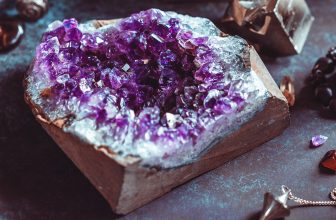
Geodes
Hollow or partially hollow spheres lined with sparkling crystals. Opening a geode feels like discovering a secret the Earth kept sealed for millions of years.
Druzy
A carpet of tiny crystals covering a surface. Druzy adds shimmer and texture without overwhelming the form beneath.
Nodules
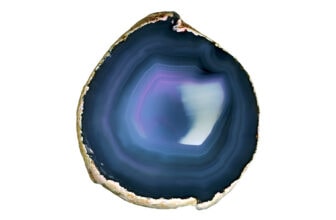
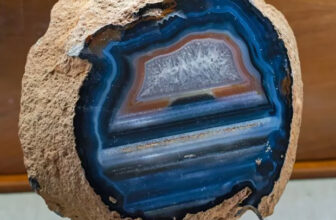
Solid, rounded growths with subtle outer textures. They often conceal banded or crystalline interiors that reveal their beauty only when sliced.
Concretions
Formed when minerals accumulate around a nucleus – like a fossil, a shell fragment, or a chunk of organic matter. These masses can be spherical, layered, or oddly shaped.
Amygdales
Mineral-filled cavities in volcanic rocks. As lava hardens, bubbles become hollow spaces that later fill with quartz, agate, calcite, or other minerals.
Vertical & Layered Growth Forms
These formations are ideal for people who feel drawn to structure or visual rhythm – each one is created through sequential, often gravity-influenced growth.
Stalactites
Crystals forming downward from ceilings of caves or cavities, shaped by dripping mineral-rich water. They grow slowly, adding layers with every drop.
Stalagmites
The upward-growing counterparts to stalactites. When these meet, they form columns – natural crystal architecture at its finest.
Vein Sections
Minerals that fill cracks or fractures in the host rock. When sliced, they reveal bands, layers, and color patterns formed by repeated mineral flows.
Sheet Crystals
Thin, plate-like formations that grow when space is extremely limited. Their delicacy and translucence make them visually striking.
Advanced Crystal Structures & Rare Natural Forms
These forms are for collectors, metaphysical practitioners, and anyone fascinated by nature’s more unusual expressions. Many develop through highly specific geological conditions or fluctuating environments.
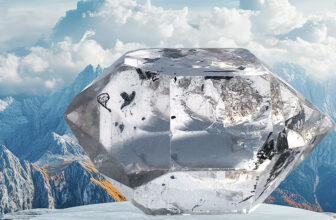
Herkimer Diamond
Exceptionally clear, double-terminated quartz found in dolostone pockets. Razor-sharp and bright, they’re famous for their pristine natural shape.
Elestial Crystals
Layered, multi-terminated structures that look like miniature staircases or stacked towers. Often associated with complex growth conditions.
Twin Crystals
Two crystals sharing the same plane of growth, forming symmetrical or intergrown shapes.
Tabular (Tabby) Crystals
Thin, wide crystals with expanded faces and compressed dimensions – like mineral pages.
Phantom Crystals
Ghostlike shapes inside a crystal, created when earlier growth layers are paused, dusted, or overgrown.
Scepters
A larger crystal cap growing atop a thinner stalk. They look like natural wands or ceremonial tools.
Etched Crystals
Carved by dissolving fluids that leave glyph-like patterns or geometric recesses.
Skeletal Crystals
Hollow or partially hollow crystals with open patterns, formed when growth outpaces interior development.
Record Keeper Crystals
Faces marked with small, shallow triangles – thought to reflect unique growth patterns or micro-etchings.
Cathedral Formations
Large crystals with multiple side-towers that resemble architecture – grand, layered, and visually imposing.
Barnacle Formations
Small crystals growing atop a larger host crystal, like a mineral community anchored together.
Bridge Formations
One crystal passing through or connecting two larger crystals – a geological moment frozen in place.
Cross Formations
Perpendicular intersections between crystals, often rare and highly prized.
Curved Crystals
Grown under uneven forces, producing graceful bends or arcs rather than straight lines.
Window Formations
Faces with internal window-like openings or transparency zones.
Botryoidal Formations
Rounded, grape-like surfaces created by spherical mineral growth – smooth, soothing, and organic.
What Makes a Crystal a “Natural Form”?
When life feels hectic, it’s easy to look at a raw crystal and wonder, “Is this truly natural, or has someone shaped it to look this way?” Many people reach for crystals hoping for grounding or clarity, but the confusion around what counts as “natural” can create even more stress. This section untangles that confusion and helps you confidently identify authentic natural formations.
Untouched and Unpolished
A crystal earns the title Natural Form only when humans haven’t shaped, cut, carved, tumbled, or polished it. The structure you see – every ridge, point, bubble, or blade – is exactly how it developed in the Earth.
There can be minor interventions, but they’re practical rather than cosmetic:
- Cleaning away clay, soil, or iron staining
- Stabilizing delicate pieces with adhesives (used sparingly and transparently)
- Removing loose debris from cavities or clusters
These steps don’t change the crystal’s shape; they simply reveal the formation nature created. If a stone’s edges look too perfect, too symmetrical, or too glossy to be real, it likely isn’t a natural form.
Identification Tips
People often approach crystals during stressful moments, searching for something real, honest, or grounding. Knowing what to look for can make the experience far more rewarding.
Here’s how to recognize a true natural form:
-
Growth lines, not tool marks
Natural surfaces show striations, step-growth, or geometric patterns caused by environmental shifts – not by sanding or grinding. -
Uneven yet purposeful geometry
Nature rarely produces perfect symmetry. Slightly imperfect angles, small chips from extraction, or varied face sizes are normal. -
Raw vs. artificially broken edges
Natural damage has irregular, slightly grainy surfaces; machine cuts are straight, sharp, and too clean. -
Inclusions and internal zoning
These are strong indicators of genuineness. If a crystal looks “too flawless,” it may have been altered. -
Organic texture
Botryoidal bubbles, etched glyphs, skeletal hollows, or rehealed breaks are all signs of natural development.
With practice, distinguishing natural from altered forms becomes intuitive, even soothing – as if you’re learning a visual language the Earth has always spoken.
Common Misunderstandings
Crystal terminology can get messy, and that confusion often leads to mislabeling. Let’s untangle a few of the most common mix-ups.
Raw vs. Rough vs. Natural
- Raw means unpolished.
- Rough can mean chipped, industrially crushed, or simply unrefined.
- Natural refers to the original geological form.
Not all raw or rough crystals qualify as natural forms.
Natural Points vs. Polished Points
Polished points have perfectly smooth sides and razor-clean edges. Natural points have subtle growth markings, small irregularities, and gentle transitions between faces.
Botryoidal Formations vs. “Raw Clusters”
Botryoidal forms are rounded, grape-like surfaces – not clusters of points. They’re often misrepresented because sellers use the word “cluster” for almost anything with multiple bumps or domes.
Matrix vs. Artificial Mounting
A true matrix is the host rock. Glue-on bases or composite pieces (common with certain mineral displays) are not natural formations.
Misunderstandings happen because the world of crystals is full of nuance – but once you learn these distinctions, your connection to the stones deepens dramatically. You can finally see the difference between nature’s handiwork and human intervention.